The territory
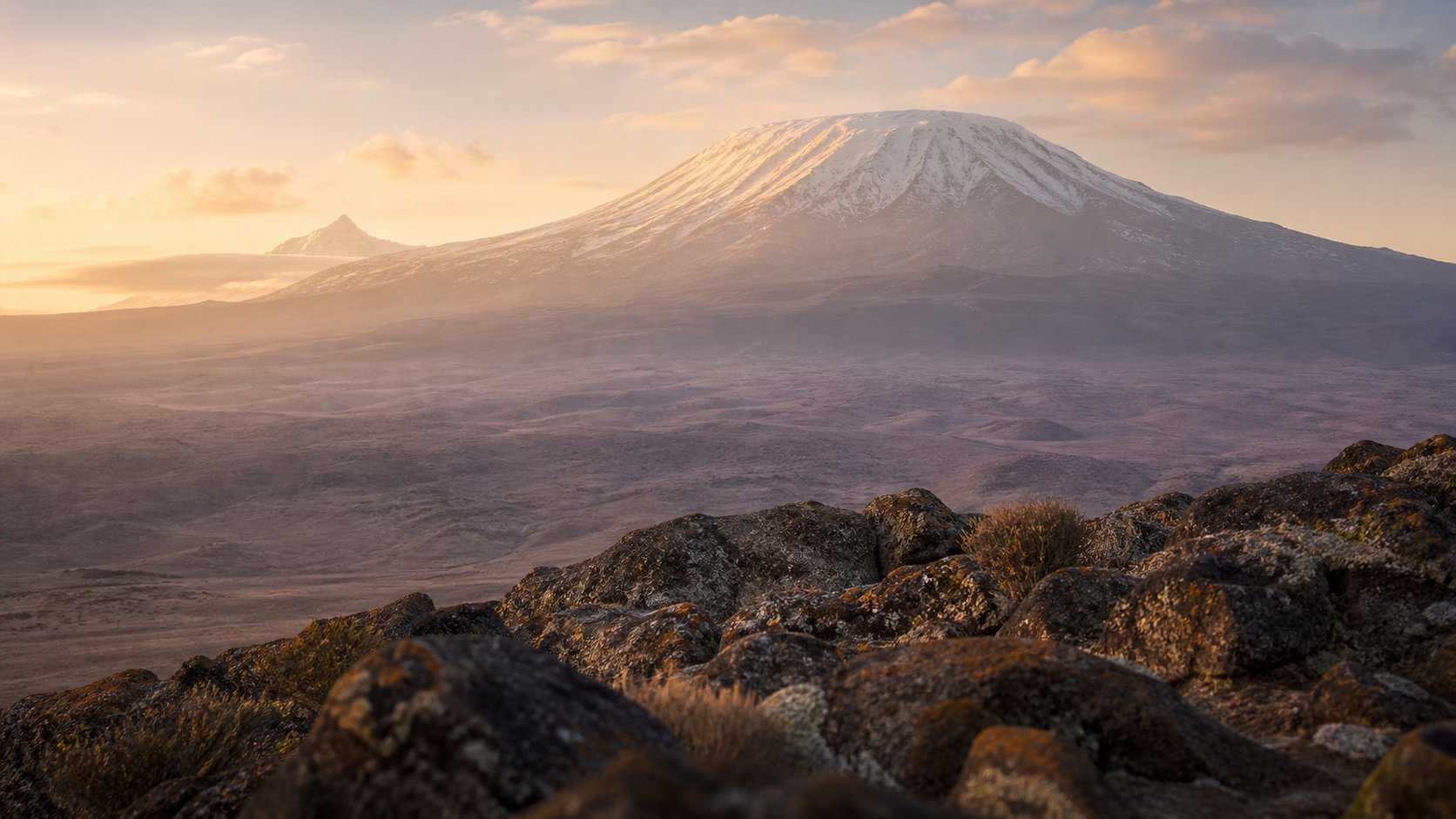
A mining area in northern Tanzania, known worldwide for a single gem: tanzanite.
About Joyzanite
Joyzanite was born from a simple idea: to offer polished tanzanites with a clear, exacting and reassuring presentation, worthy of the rarity of this gem.
1. The place
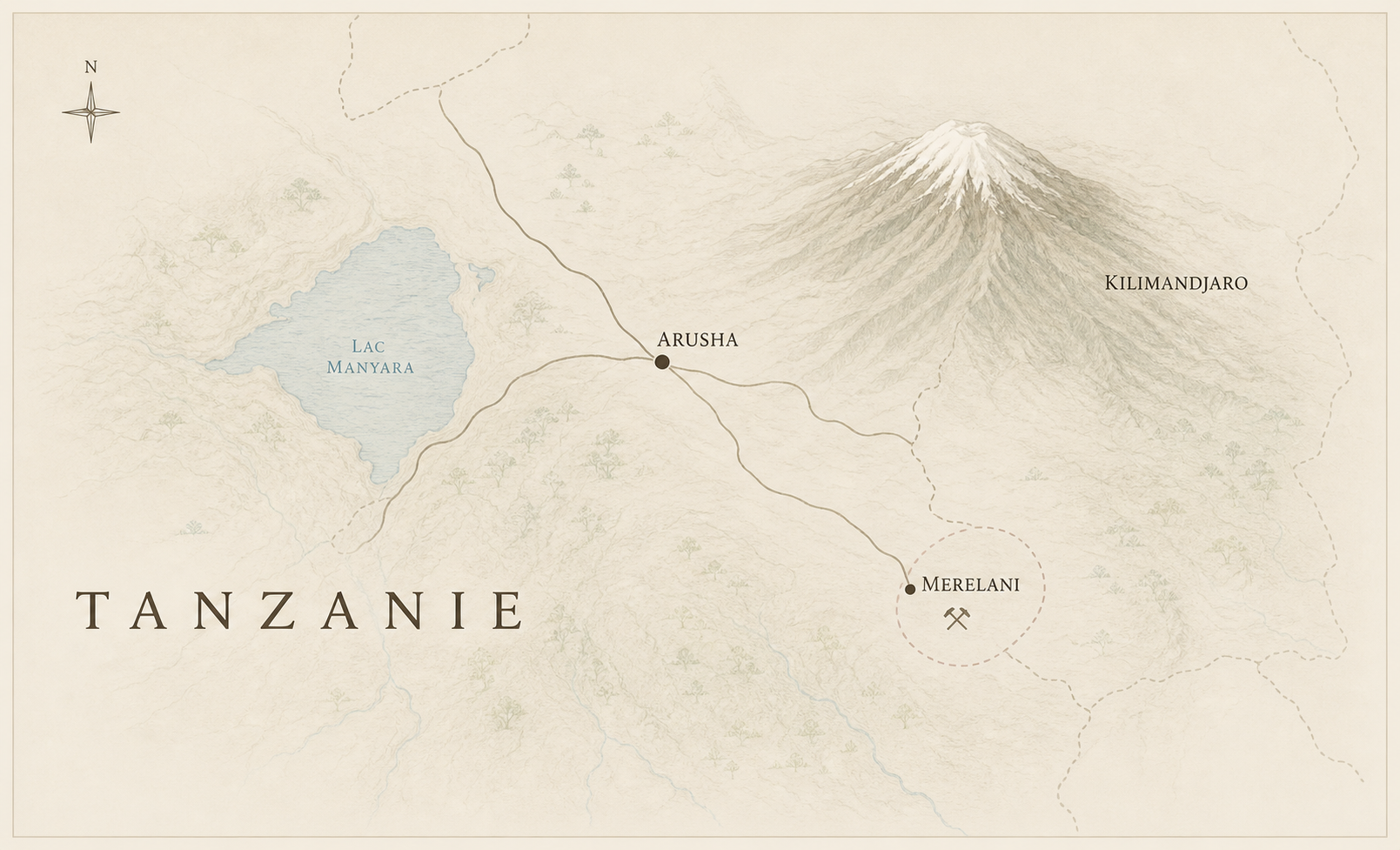
Tanzanite is a gem variety of zoisite discovered in northern Tanzania, in the Merelani region, near Arusha and Kilimanjaro. This extremely localized origin is what sets the stone apart from gems found across several countries or continents.
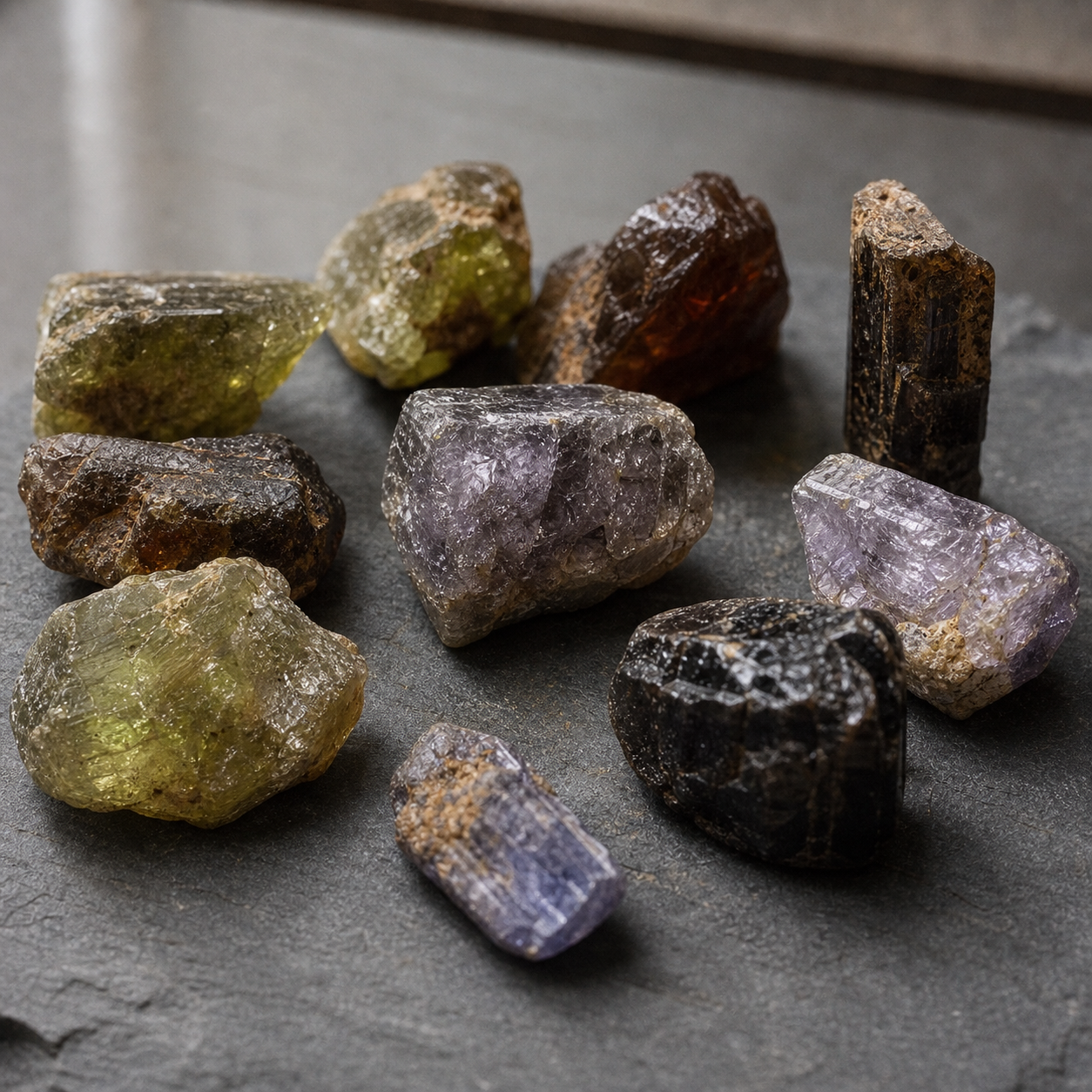
At extraction, the rough crystal is not necessarily blue. An unheated tanzanite can show yellow, green, brownish, gray, violet, blue-violet, very dark brown or almost black tones. Heating, when applied, often removes the brown veil and reveals the blue to blue-violet color sought in jewelry.
A mining area in northern Tanzania, known worldwide for a single gem: tanzanite.
A rare mineral material, often discreet before transformation, that must be assessed stone by stone.
Human work reveals the stone: sorting, orientation, possible heating, precision cutting and polishing.
2. The mine
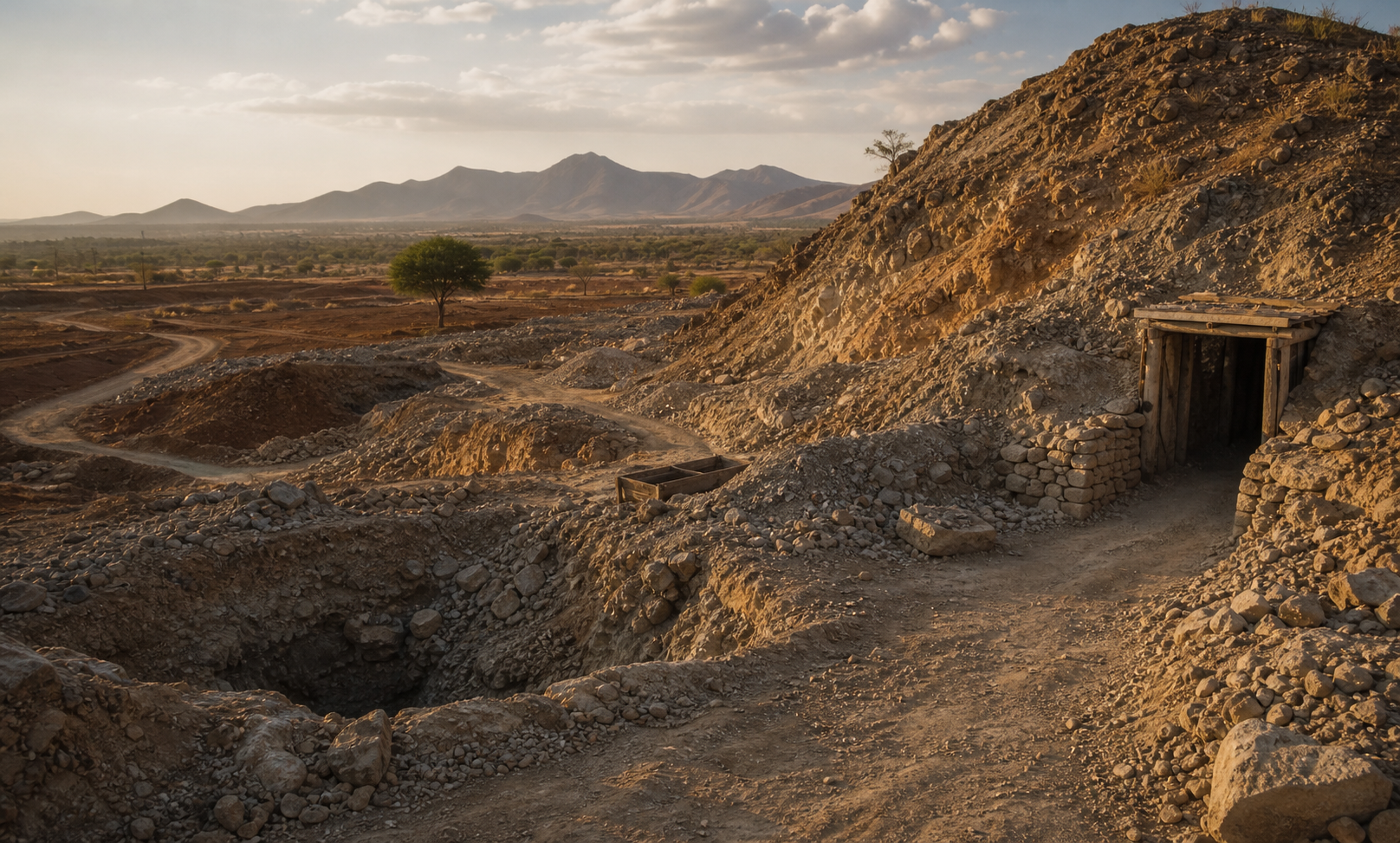
The Merelani deposit is generally described as the only known commercial source of tanzanite. The productive zone is often presented as a very limited geological strip, about 7 km by 2 km, divided into several mining blocks. For a colored gem sold worldwide, this area is exceptionally restricted.
3. Rarity and future
Tanzanite is not cultivated, reproduced or replaced by equivalent laboratory production. Imitation stones may exist, but natural tanzanite depends on a specific deposit that has already been mined for several decades.
There is no reliable official date announcing the exact day the mine will be depleted. The important fact, however, is clear: if no comparable new commercial source is discovered, the global availability of natural tanzanite will decline as the Merelani deposit is mined. This tension between beauty, unique origin and limited reserve is what feeds its rarity.
Public references used: GIA gemological documentation on tanzanite, Merelani location and geological data commonly cited for the productive zone.
4. From rock to gem
Accessing tanzanite requires difficult mining work: hard rock, depth, dust, heat and permanent safety measures. Every rough crystal obtained already represents a significant effort.
The rough is observed to understand its transparency, inclusions, fractures and color orientation. Not every piece can become a jewelry-grade stone.
Some stones are heated to reveal blue to blue-violet. Others are kept unheated for their natural character, rarer and often more nuanced.
The lapidary chooses the axis, shape and proportions to preserve weight, reveal brilliance and give the stone a presence worthy of jewelry.
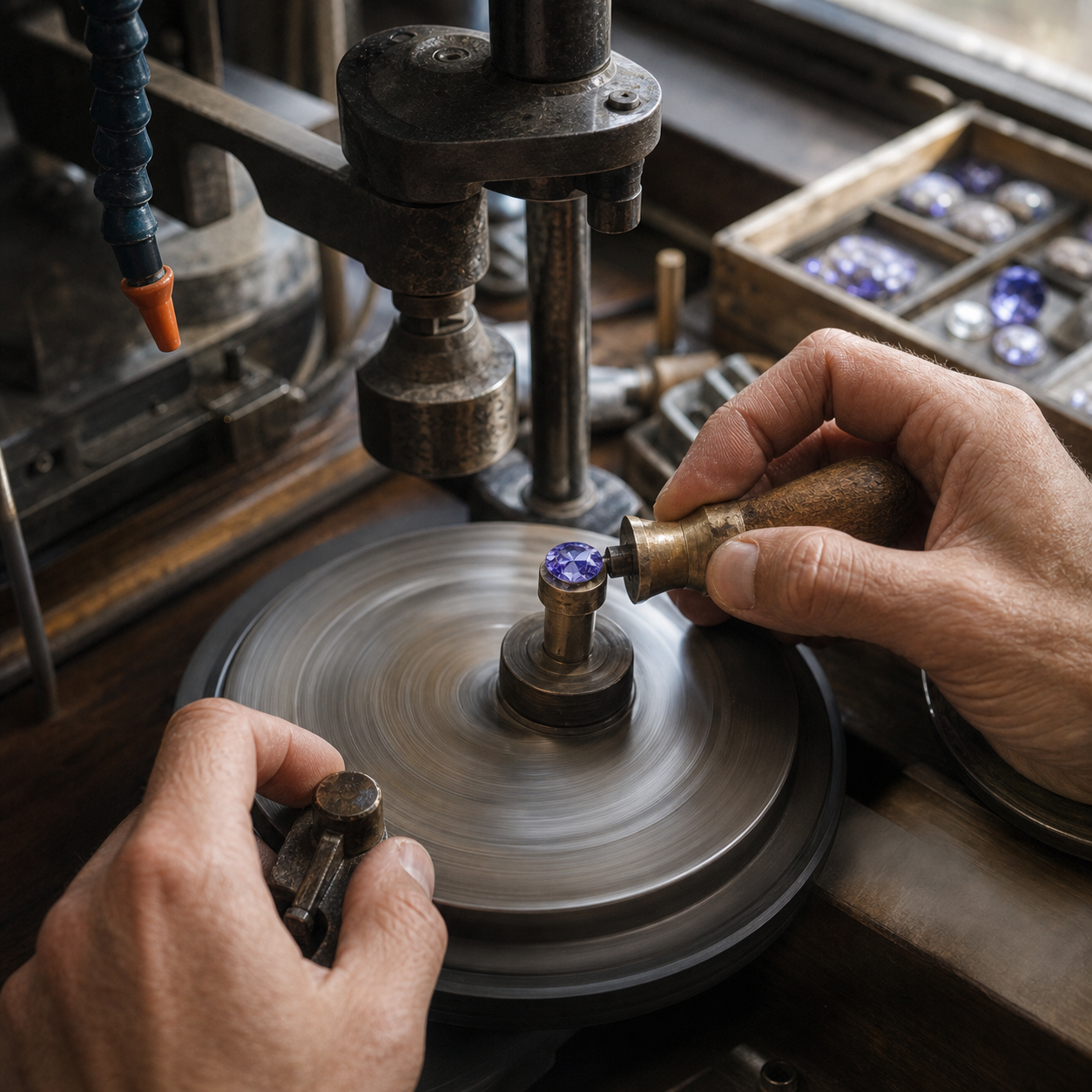
5. Cutting and polishing workshop
Cutting a tanzanite is not simply about creating a shape. The lapidary must read the stone: understand its color axis, avoid weaknesses, preserve useful weight and place facets so that light circulates correctly.
Final polishing gives sharpness, brilliance and depth. This step transforms a rare material into a precious stone ready to be collected, mounted or entrusted to a jewelry atelier.
6. Jewelry destination
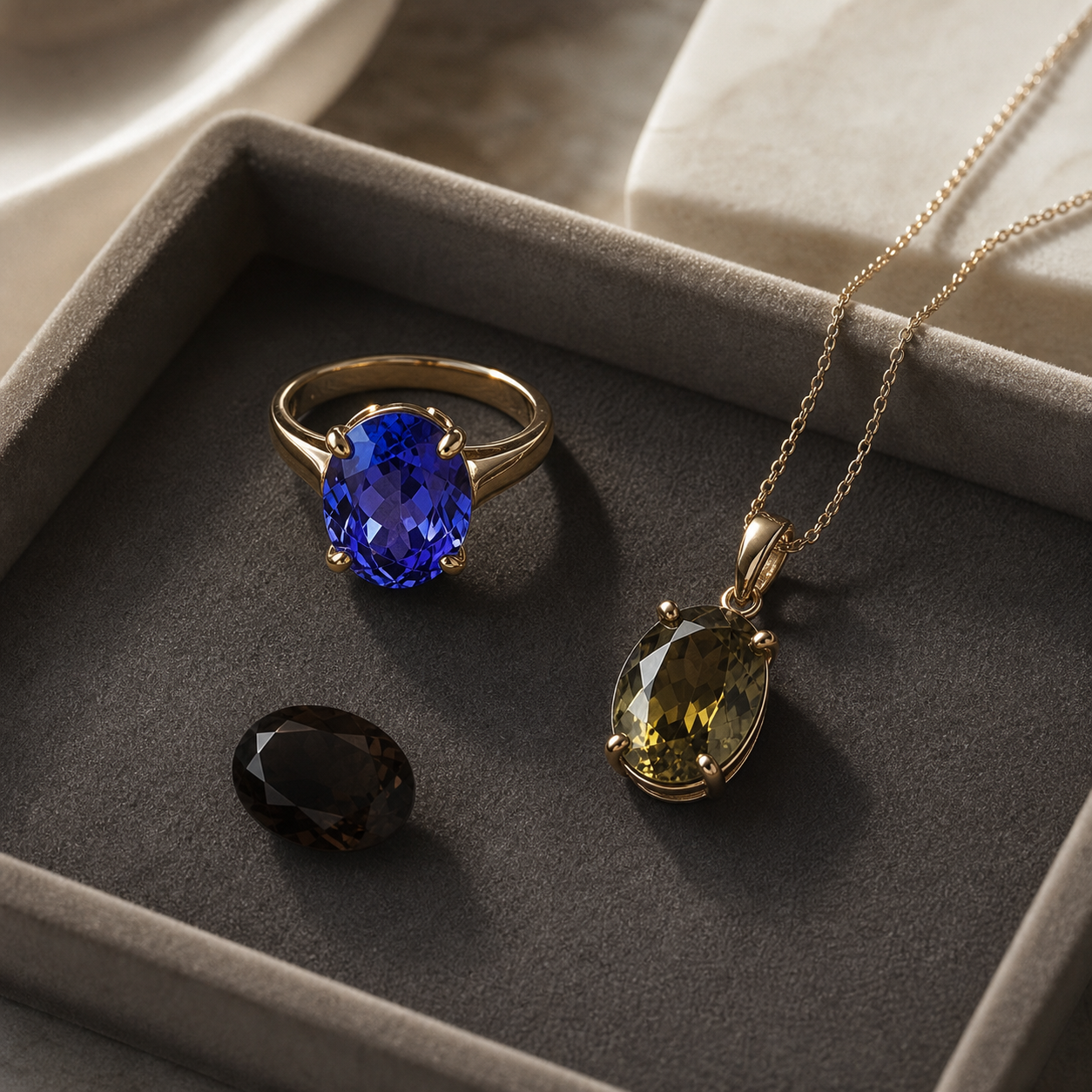
For now, Joyzanite sells polished stones only, not finished jewelry. This staging shows the jewelry potential of tanzanites: a heated stone can offer an intense, legible blue, while an unheated stone can present a more nuanced personality, sometimes yellow, green, brownish, violet, grayish, dark brown or almost black.
The choice depends on the project: classic blue radiance, natural collector character, or a stone intended for a unique creation.
Systematic control
100%Absolutely all our stones have been authenticated by a gemologist using a refractometer and microscope to certify that every stone offered for sale is natural tanzanite. This control precedes every publication on the site and forms the basis of our trust commitment.
Certifications and authenticity
All our stones are checked before being offered for sale. For small stones, GIA certification can be added on request when the buyer wants an independent document in addition to our gemological control.
Depending on value, size, project and timing, different certifications can be requested from recognized laboratories.
Certification available on request.
Reports possible depending on the stone and target market.
High-end option for collection dossiers.
Recognized laboratory for colored gems.